
Coverage Snapshot
Covers – .
- Articles analyzed
- 34
- Model-flagged
- 3
- Days observed
- 5
Opening Note
The week's coverage centered on Joint Sea-2026, the annual China-Russia naval exercise, which wrapped up at Qingdao on July 13 and generated more articles than any other single story in the days observed. That volume alone is not unusual for a named bilateral exercise. The accumulation of specific details across those articles deserved a closer look. Submarines and submarine rescue vessels participated, extending the format from a predominantly surface-focused drill into a three-domain posture. Staff officers from both sides reportedly navigated tactical planning with minimal interpreter involvement. Most concretely, a subset of the participating forces departed directly for a joint Pacific patrol after the exercise concluded. That patrol detail carries more operational specificity than routine exercise reporting does.
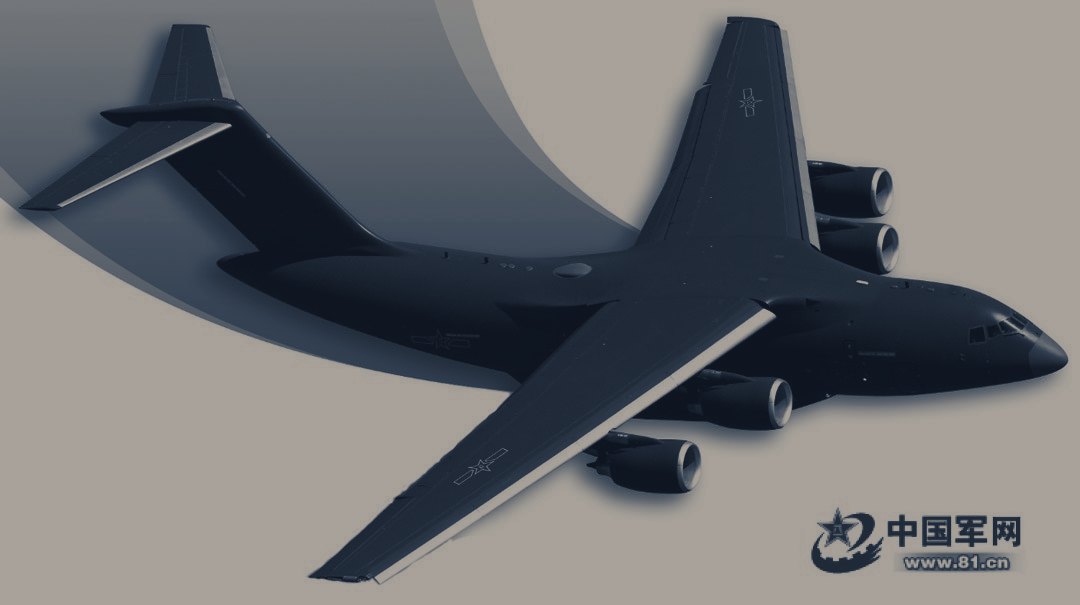
The second significant item came from a different direction. A PLA Daily feature on a Y-20 strategic airlifter regiment confirmed that the Y-20B, fitted with a new domestically produced engine (widely identified as the WS-20), conducted its first international flight in April 2026, repatriating Chinese People's Volunteer Army remains from South Korea. The article also stated that the regiment has conducted Y-20 patrol operations in the Taiwan Strait, East China Sea, and South China Sea in coordinated formations with combat aircraft. Both details are already public, but neither had appeared this explicitly in one Chinese military media article before, which makes this week's piece a useful baseline record.
The week's record poses a problem of calibration. Both the Joint Sea and the Y-20B items are notable, but neither is a sharp departure from documented trends. The Joint Sea series has been expanding in scope and complexity since 2012. The Y-20 has been in operational use since 2016, and the B-variant's existence was already known. A careful reader has to decide whether this week's coverage documents incremental institutionalization of capabilities that have been developing for years, or whether specific details, the Pacific patrol in particular, deserve to be read as a harder operational signal. The source material supports the former more than the latter, with one exception worth tracking.
In the days observed, the rest of the coverage was predominantly political work, domestic disaster relief in response to Typhoon Bawi, and doctrinal commentary. The disaster relief reporting documented a standard multi-echelon response across Liaoning, Jilin, and Gansu, involving named PAP and PLA garrison elements. The doctrinal and political work pieces followed recognizable PLA Daily formats. Nothing in that volume was anomalous, though a few individual articles added detail on specific topics.
What Stood Out
The Joint Sea-2026 coverage across July 12-13 is the week's most substantive cluster. Three things in that reporting stand out.
The first is the subsurface integration. The July 12 overview article explicitly frames the inclusion of submarines and submarine rescue vessels as a deliberate progression of the Joint Sea format, not an anomaly. Earlier iterations of the series were predominantly surface-focused. A format that now incorporates coordinated fire between surface combatants and subsurface tracking, with mutual submarine rescue exercises in which each side rescued the other's boats, documents a qualitative change in how the two navies are exercising together, whatever the limits of the political relationship around it.
The second is the Pacific patrol. Multiple articles confirm that after the Qingdao closing ceremony, a subset of Chinese and Russian vessels departed for a joint maritime patrol in the Pacific Ocean. This detail is present in the July 13 significant article and corroborated in the July 12 overview. The patrol component is not new: the two navies have conducted post-exercise patrols before. The question the articles raise is whether it is becoming a regularized post-exercise format rather than an occasional add-on. The source material does not answer that definitively, and the patrol's specific geography is not disclosed.
The third is the Y-20B article from July 12, which sits apart from the Joint Sea cluster but belongs alongside it as the week's second significant item. The article confirms that the Y-20B's first international flight was the April 2026 CPVAF remains repatriation mission; the aircraft is powered by a new domestically produced engine, widely identified as the WS-20. It also documents the regiment's operational record across all three major maritime theaters, including coordinated patrols with combat aircraft, and includes imagery framing the Y-20 explicitly as an airborne assault platform, not solely a logistics asset. Taken together, the article is a public capability statement about a platform that has been in service for years but whose operational scope had not been laid out this comprehensively in a single PLA Daily piece.
Why It Matters
The Joint Sea series has been running since 2012, and each year's iteration risks being read as simply "another exercise." The 2026 edition adds enough concrete detail to complicate that reading without overturning it.
The subsurface component matters because submarine integration is harder to achieve than surface coordination. Mutual rescue exercises require compatible communications, compatible rescue systems, and enough procedural trust to operate around each other's submarines in realistic conditions. The article documenting that staff officers navigated tactical planning with minimal interpreter support adds a small but concrete data point about operational interoperability, distinct from the symbolic partnership language that dominates the official Chinese framing.
The Pacific patrol component extends the exercise's operational footprint beyond the drill itself. An exercise that concludes and then transitions directly into a combined patrol is a different kind of event than one that concludes and disperses. Whether that transition is becoming routine is the relevant question, and the data available this week does not settle it.
The Y-20B confirmation matters for a narrower reason. Its new domestically produced engine, widely identified as the WS-20, replaces the Russian-sourced D-30KP2 that powers the original Y-20. Its appearance on an international flight in 2026 establishes a public baseline for when the upgraded variant entered operational use outside Chinese territory. The article frames the Y-20 as an airborne assault platform. Parachute insertion training is documented alongside the logistics and patrol missions, a reminder that the aircraft's role goes beyond cargo and VIP transport.
Routine Baseline
The Typhoon Bawi disaster relief coverage across July 14-16 is the clearest example of routine this week. PLA Daily reliably covers large-scale domestic disaster response. The articles from this week document a standard multi-echelon activation: county-level People's Armed Forces Departments mobilize militia for initial evacuation, Armed Police detachments follow with engineering tasks, and PLA garrison and group army brigades handle the heavier work. The named units fit the expected response structure for a mid-tier typhoon event across the Liaoning-Jilin-Gansu corridor: the Shenyang Garrison, the Armed Police Liaoning Corps, a Northern Theater Command Army brigade, and the Armed Police Gannan Detachment. The coverage is useful as a baseline record of which formations hold primary response responsibility in those provinces, but it documents nothing about changed operational doctrine or elevated posture beyond the immediate disaster.
The political work content follows formats PLA Daily uses consistently: a "Strong Military Forum" essay on frugality, a Party branch procedural compliance piece from the 80th Group Army, and a Rocket Force doctrinal article on comprehensively strict governance. Their purpose is clear: they reinforce behavioral norms among cadres and grassroots Party branches, continue the post-2022 discipline consolidation, and respond to the Rocket Force corruption crisis that began in 2023. These articles are evidence of sustained institutional concern about the problems they address, not evidence that anything new happened.
Term to Know
制智权 (zhì zhì quán): "Dominance of Intelligence"
This warfighting concept appears in a July 14 PLA Daily doctrinal article on intelligentized command and control. It sits alongside more familiar concepts like air superiority or maritime control, but applies to the cognitive and algorithmic domain: the ability to out-process, out-decide, and out-adapt an adversary in an information-saturated environment. The July 14 article frames it as an operational objective on par with kinetic dominance, and identifies three enabling priorities the PLA believes are required to achieve it: mastery of data, effective human-machine integration, and what the article calls "algorithm confrontation" (算法对抗), meaning the capacity to both exploit and defend against adversarial manipulation of AI-driven systems. The article's value is partly in what it acknowledges is not yet solved: data excess and contradiction under time pressure, incomplete information, and algorithm vulnerability to input perturbations. Dominance of intelligence is the PLA's stated goal. The article is also an honest account of how far the force still has to go to get there.
What I'm Watching Next
The Pacific patrol announced at the close of Joint Sea-2026 is the most concrete thing to track. Observable indicators that it is becoming a regularized post-exercise format would include: PLA Daily or official Chinese defense ministry statements describing the patrol by geographic scope or duration; a similar patrol being announced after next year's iteration without special framing; or other official Chinese media characterizing the patrol as a standing component of the Joint Sea structure rather than an ad hoc addition. Indicators that it remains an occasional rather than institutionalized practice would include absence of any patrol reporting in the weeks following the exercise, or a defense ministry briefing that describes it in more limited terms than the exercise articles suggested.
On the Y-20B, the article's value as a baseline depends on what follows. If PLA Daily or other official sources publish additional coverage of Y-20B operations outside China, whether logistical, diplomatic, or patrol-related, that would extend the operational record and help establish whether the April 2026 remains repatriation was the inaugural international flight or only the first one publicly acknowledged. Named units, geographic specifics, and repeated coverage across multiple sources would be the indicators worth tracking.
The intelligentized C2 doctrinal article from July 14 is worth reading alongside any follow-on coverage in the "Data Empowering Combat Capability Building" series that PLA Daily launched on July 13. If that series extends to additional ISF units or named theater command formations, or includes specific capability claims beyond what appeared this week, it would help determine how broadly the data-support architecture described is distributed across the force.
Source Trail
16 selected records used in this analysis. Original sources remain authoritative.
- China-Russia "Joint Sea-2026" Joint Exercise Concludes 中俄“海上联合-2026”联合演习闭幕
- Overview of the Maritime Exercise Phase of the China-Russia "Joint Sea-2026" Joint Exercise 中俄“海上联合-二〇二六”联合演习海上演练阶段综述
- Spreading Wings, Sailing Far! Officers and Soldiers of an Air Force Aviation Regiment Pilot the "Kunpeng" and Soar into a New Era 振翅远航!空军航空兵某团官兵驾驭“鲲鹏”奋飞新时代
- Driving a Leap in Intelligentized Command and Control Capabilities 推动智能化指挥控制能力跃升
- Observations on a Comprehensive Replenishment Training Exercise at a Navy Flotilla 海军某支队综合补给训练见闻
- PLA and Armed Police Forces Personnel and Militia Launch Emergency Rescue Operations 解放军和武警部队官兵、民兵展开抢险救援
- China-Russia "Joint Sea-2026" Joint Exercise 中俄“海上联合-2026”联合演习
- Repair Technician Ai Shajiang of a Brigade Under the 76th Group Army: A 'Hand-Built' Unmanned Vehicle Proves Its Worth 第76集团军某旅修理技师艾沙江:“手搓”无人车派上大用场
- China-Russia "Joint Sea-2026" Joint Exercise Concludes 中俄“海上联合-2026”联合演习闭幕
- A Technical Section of a Certain Brigade Under the 82nd Group Army Establishes a Clear Orientation of Striving and Shouldering Responsibility Through Concrete Results 第八十二集团军某旅某技术室以实绩立起奋斗担当鲜明导向
- Academy of Military Sciences Defense Science and Technology Innovation Research Institute Targets Battlefield Requirements in Scientific Research 军事科学院国防科技创新研究院瞄准战场需求科研攻关
- 'Data Empowering Combat Capability Building' Series | Data Orders: Re-'Formulating' Combat Capability Building “数据赋能战斗力建设”系列报道丨数据订单:为战斗力建设重新“配方”
- Air Force Command College Organizes Cadets to Conduct On-Site Teaching at Multiple Locations to Forge the Soul of Victory 空军指挥学院组织学员赴多地开展现地教学铸牢胜战之魂
- Strong Military Forum | Even When You 'Have the Means,' You Must Still 'Refuse to Indulge' 强军论坛丨“有条件”也要“不讲究”
- "Obviously Clear Matters" Must Also Be Handled According to Regulations “明摆着的事”也要按制度办
- Deeply Study and Implement Xi Jinping's Thought on Party Building | Uphold Comprehensively Strict Governance of the Party 深入学习贯彻习近平党建思想丨坚持全面从严治党
Cite this edition
Benjamin Yang, “The PLA Watch: Joint Sea-2026, the Y-20B Abroad, and the Week's Quieter Signals,” The PLA Watch No. 11, China Mil Watch, 18 July 2026. https://indopacificrecord.org/the-pla-watch/posts/2026-07-18.html