
_Class_Ballistic_Missile_Submarine.JPG)
Coverage Snapshot
Covers – .
- Articles analyzed
- 39
- Model-flagged
- 2
- Days observed
- 6
Opening Note
China's most consequential military-media move this week went beyond a missile test: it was the decision to announce one.
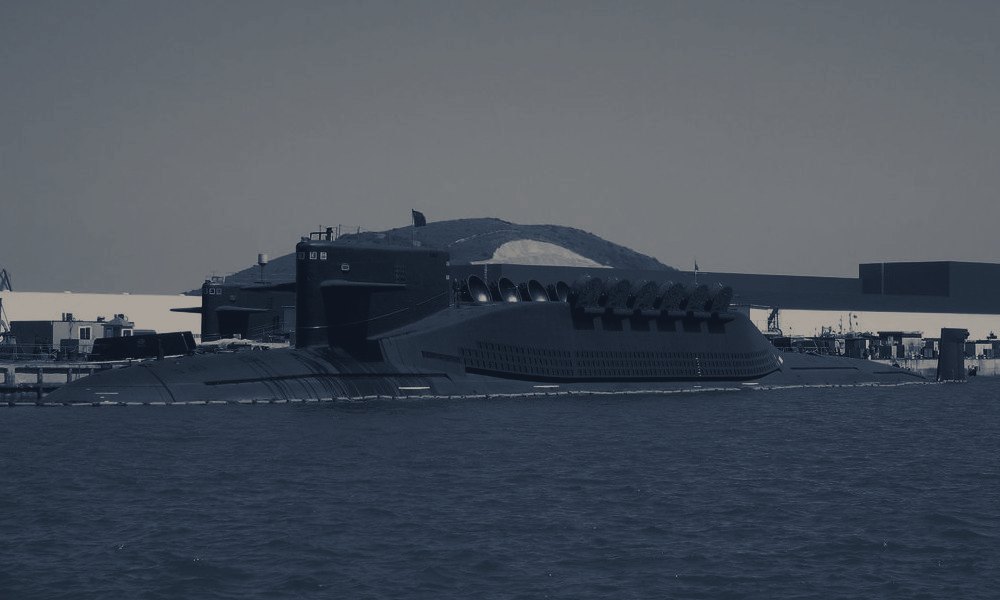
On July 6, PLA Daily reported that a PLAN strategic nuclear submarine had launched a submarine-launched ballistic missile carrying a training-simulation warhead at 12:01, with the reentry vehicle landing in a designated Pacific impact area. The report described the event as routine annual training and said relevant countries had been notified in advance. A second report followed the next day.
Those details matter because the disclosure itself is unusual. Beijing did more than confirm that a test had occurred: it supplied a precise launch time, identified the Pacific as the impact area, framed the event as regular training, and emphasized prior notification. The available reporting does not establish whom China was trying to influence or why it chose this moment, but it does show that officials wanted foreign governments to see the test as both credible and procedurally controlled.
The rest of the week was more familiar. Coverage was dominated by flood-relief operations and the China-Russia Joint Sea-2026 exercise, both recurring institutional categories in PLA media. This edition covers July 5–10, or six of the seven days in the reporting window. The gap should be kept in mind, though nothing in the available record changes the week's central picture.
What Stood Out
The missile test was model-flagged because of the event itself and because of the disclosure around it.
PLA Daily's account paired operational detail with reassurance. It called the launch annual training, said the warhead was simulated, and noted advance notification to relevant countries. That language positions the test as a normal expression of a standing capability rather than a crisis move. Yet routine training does not usually require this degree of public specification.
A sea-based deterrent rests partly on outside confidence that the force can operate, communicate, and survive under real conditions. Public reporting cannot prove those things, but it can make a visible contribution to how other governments assess them. Beijing's choice to publicize the launch therefore deserves to be treated as part of the event rather than background to it.
Why It Matters
The report gives a small but meaningful view of how Beijing wants its nuclear modernization to be read. China's official description presented the launch as safe, routine, and consistent with annual training. The combination of a Pacific impact area and advance notification also placed the event in an international setting rather than treating it as an entirely internal military matter.
The disclosure does not say exactly how mature the PLAN's SSBN force is, what missile was used, or how Chinese leaders would employ it in a crisis. Those are larger questions than the source can answer. But the official narrative clearly sought to join two ideas: a credible long-range capability and a responsible, normalized posture around its exercise.
For analysts, the next question is not whether the launch was routine or signaling. It may have been both. The useful task is to watch whether China continues to disclose tests with this level of detail, and whether the same formula appears across future missile, submarine, and strategic-force reporting.
Routine Baseline
Flood-relief reporting accounted for much of the week's volume. PLA, People's Armed Police, and militia units were featured in operations across Guangxi, Hubei, and Gansu after heavy rainfall associated with Typhoon Maysak. The stories followed a familiar formula: named units, personnel totals, rescue tasks, and Party-members presented as examples of frontline commitment.
That coverage matters as baseline evidence of domestic mobilization, but it should not be mistaken for a change in military posture. The reported scale, including more than 5,800 personnel in Guangxi and more than 4,200 militia personnel from the Guangxi Military District, is useful for tracking the manpower that provincial emergency response can draw upon. It is not, on its own, evidence of a new operational role for the PLA.
Joint Sea-2026 also fit an established pattern. The China-Russia exercise opened in Qingdao on July 6 and entered its maritime phase on July 9, with reporting on air defense, anti-submarine work, live-fire tasks, and crew exchanges. The exercise series has long served as a venue for practical naval coordination and political signaling. This iteration continues that pattern rather than clearly breaking from it.
One detail is worth retaining for future comparison: submarine rescue appeared as an explicit training subject. A single mention does not demonstrate deeper undersea integration, but it gives future reporting a concrete point of reference.
Term to Know
远海训练 (Yuǎn Hǎi Xùnliàn) — Far-Seas Training
Far-seas training (远海训练) is the PLA Navy's term for operations beyond China's near-seas environment intended to build open-ocean competence. It commonly appears when PLAN deployments around Japan or elsewhere in the Western Pacific attract outside attention.
This week, the Ministry of National Defense used the term in response to Japanese reporting on a PLAN formation operating in waters around Japan. The official formulation was familiar: planned annual activity, consistent with international law, and not directed at any specific country. The phrase matters because it turns a visible deployment into a claim of normality. Tracking where Beijing applies that label, and how often, is one way to follow the expansion of the PLAN's operational footprint without treating every deployment as a crisis signal.
What I'm Watching Next
First, whether this SLBM disclosure becomes a pattern. Future announcements with comparable detail on launch timing, impact areas, and prior notification would suggest that Beijing has decided to make a portion of its SSBN testing more publicly legible. If this report remains exceptional, its timing will deserve closer attention.
Second, the practical content of China-Russia naval cooperation. Joint Sea exercises should not be read as proof of alliance-level integration. But recurring references to anti-submarine work, submarine rescue, command coordination, and platform familiarity can reveal whether the relationship is accumulating more substantive operational content over time.
Finally, the 73rd Group Army's reporting on tactical controllers is worth following. Its discussion of personnel applying non-Army munitions parameters incorrectly points to the kind of friction that often sits beneath broad claims about joint operations. Future unit-level reporting may show whether this is a local corrective effort or part of a wider push to improve cross-service fire coordination.
Source Trail
13 selected records used in this analysis. Original sources remain authoritative.
- Chinese Navy Successfully Organizes Test Launch of Submarine-Launched Strategic Missile 中国海军成功组织潜射战略导弹试射
- Chinese Navy Successfully Organizes Test Launch of Submarine-Launched Strategic Missile 中国海军成功组织潜射战略导弹试射
- China-Russia 'Joint Sea-2026' Joint Exercise Enters Maritime Exercise Phase 中俄“海上联合-2026”联合演习进入海上演练阶段
- A Brigade of the 74th Group Army Conducts Cross-Domain Joint Training with Multiple Air Force Units 第74集团军某旅携手多支空军部队开展跨域联训
- A Rocket Force Unit Explores and Innovates Training Organization Methods: Mutual Evaluation and Examination Among Same-Formation Subunits 火箭军某部探索创新组训方式:同建制分队互评互考
- China-Russia "Maritime Joint-2026" Joint Exercise Opens 中俄“海上联合-2026”联合演习开幕
- Chinese Navy Ship Formation 83 Concludes Friendly Visit to Vietnam 中国海军83舰编队结束对越南友好访问
- PLA and People's Armed Police Officers and Soldiers, Militia Continue Fighting on the Rescue Front Line 解放军和武警部队官兵、民兵持续奋战救援一线
- Firepower Resources Available for Coordination Grow Increasingly Rich; Tactical Controllers' Vision No Longer Confined to Land 能调度的火力资源日益丰富,战术引导员视野不再局限于陆地
- A Brigade of the 76th Group Army: Air-Ground Coordination Opens a 'Lifeline' 第76集团军某旅:空地协同打通“生命通道”
- PLA and People's Armed Police Officers and Soldiers, Militia Carry Out Emergency Rescue Operations at Full Strength 解放军和武警部队官兵、民兵全力开展抢险救援
- Chinese Aegis' Type 052D destroyer Kaifeng meets Russia's 'carrier killer' Varyag as crews exchange visits during Joint Sea-2026 naval exercise 'Chinese Aegis' Type 052D destroyer Kaifeng meets Russia's 'carrier killer' Varyag as crews exchange visits during Joint Sea-2026 naval exercise
- China Coast Guard Lawfully Expels Japanese Vessel That Illegally Entered China's Territorial Sea Around Chiwei Yu 中国海警依法驱离日非法进入我赤尾屿领海船只
Cite this edition
Benjamin Yang, “The PLA Watch: Beijing's Public SLBM Test and What It Was Designed to Do,” The PLA Watch No. 10, China Mil Watch, 11 July 2026. https://indopacificrecord.org/the-pla-watch/posts/2026-07-11.html