
_20220504.jpg)
Coverage Snapshot
Covers – .
- Articles analyzed
- 41
- Model-flagged
- 4
- Days observed
- 7
Opening Note
Most of this week’s 41 PLA Daily articles belonged to the institution’s regular churn: port visits, political work, Party-building campaigns, and doctrinal commentary. Four articles were flagged as significant, but they resolved into three threads. Liaoning trained alongside an amphibious assault ship formation in the Western Pacific. A Rocket Force brigade tested whether one operator could cover four crew positions during live fire. The CMC also staged its first military-wide competition for small and micro drones.
These reports concern different services and technologies, yet they circle the same problem: how to keep combat power intact when conditions become less forgiving. Far-sea operations strain command networks and logistics, missile units depend on specialized crews that may not remain whole in wartime, and small drones are easy to field but much harder to absorb across a large force. None of the three reports proves that the PLA has solved those problems, but together they show where the institution is applying pressure.
That distinction matters because PLA Daily is an institutional publication, not a neutral window into readiness. A report that one operator performed four jobs during an exercise shows what the brigade wanted to test and publicize, but it does not establish that the method would work across the Rocket Force or under combat conditions. The source can reveal priorities but cannot, by itself, certify performance.
What Stood Out
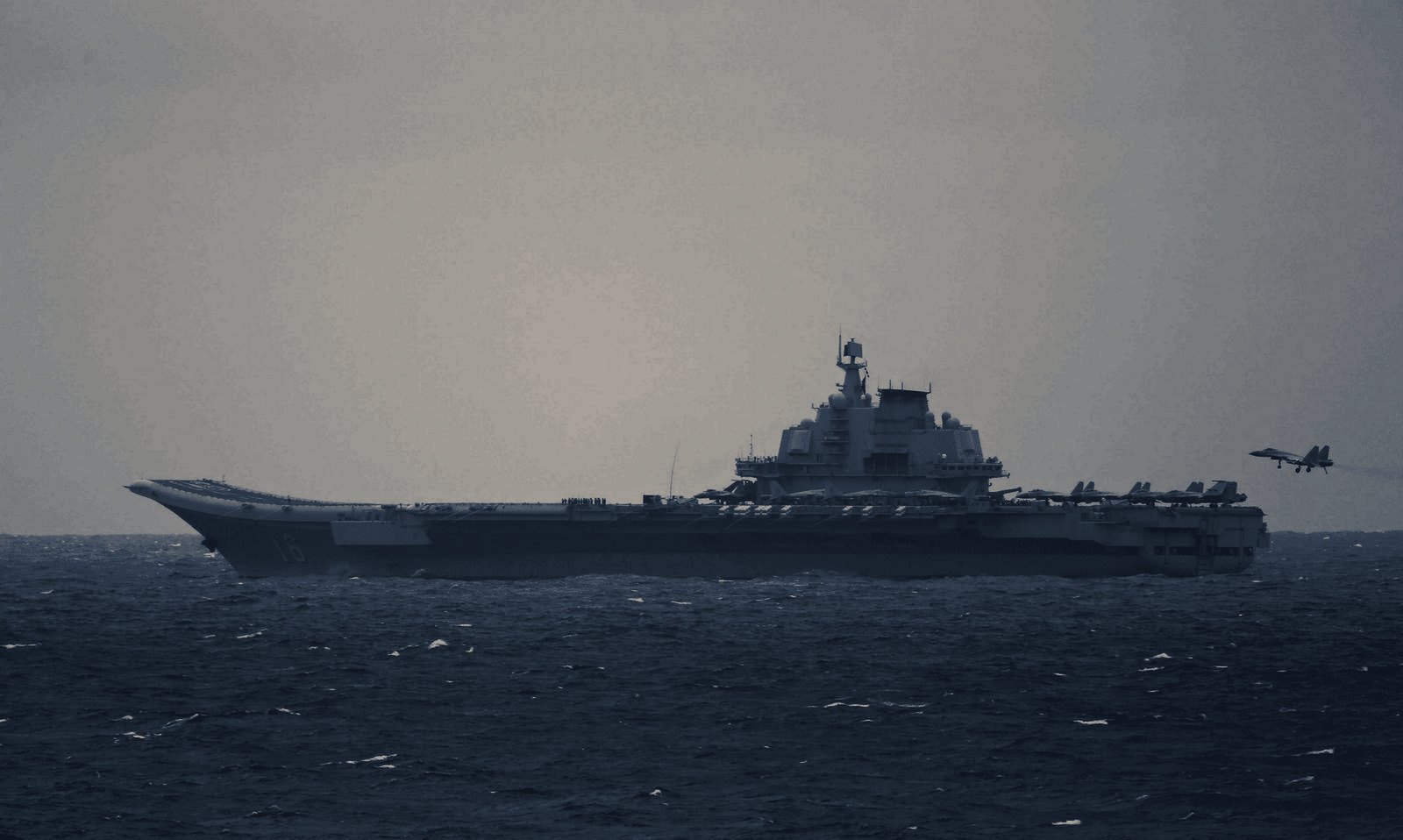
The strongest operational reporting came in two articles on Liaoning’s return to Qingdao after more than 40 days of training in the South China Sea and Western Pacific. PLA Daily described live weapons employment, day-and-night ship-aircraft confrontations, and shore-sea systems drills. More important than the weeks Liaoning spent at sea was whom the carrier trained with. The strike group reportedly exercised alongside an amphibious assault ship formation, bringing two formations with different roles into the same far-sea training cycle.
A June 27 article offered a rarer look inside a Rocket Force brigade. Each member of the brigade Party committee had been assigned a combat research topic, and the commander’s portfolio included missile employment across varied terrain and what the article called “extreme reduced-manning operations.” During one live-fire exercise, a single operator reportedly performed the work of four crew positions. The claim is narrow and the conditions are unclear, but the problem behind it is unmistakable: how a highly specialized missile unit keeps functioning after losing people.
The third thread came from “Bee Shadow 2026,” the first military-wide competition for innovative uses of small and micro UAVs. Sixty-nine teams competed in flying, modification, networking, and management. More revealing than the contest itself was its sponsorship by both the CMC Equipment Development Department and the Training Management Department. The PLA is treating small-drone proficiency as an equipment problem and a training problem at the same time. That suggests the technology has spread faster than common standards for using it.
Why It Matters
The carrier-amphibious exercise extends the public record of the PLA Navy trying to connect formations that have often appeared separately in official reporting. Carrier aviation provides air cover, surveillance, and strike capacity, while amphibious groups carry forces meant to move from sea to shore. Training them together at range is relevant to any contingency in which the PLAN would need to protect a landing force or sustain operations beyond the immediate coastline. One report does not establish a mature combined formation, but it does establish that the pairing entered the exercise script.
The Rocket Force report points to a different kind of fragility. Missile operations rely on trained personnel performing tightly defined tasks. If several specialists are unavailable, equipment can remain intact while the unit’s ability to use it collapses. Testing one person across four positions is therefore a story about resilience under attrition more than efficiency. The article does not say whether the method is safe, repeatable, or common beyond this brigade, but it does show that crew loss has become a research problem serious enough to reach the Party committee and a live-fire range.
“Bee Shadow 2026” sits on the other side of the same challenge. The PLA can buy or build large numbers of small drones, but fielding hardware is not the same as producing units that can fly, repair, modify, network, and manage it under pressure. A military-wide competition allows the CMC to find workable practices quickly and compare units against one another. It is a practical response to uneven absorption.
Routine Baseline
The rest of the week was less dramatic, though still useful as a baseline.
China-Russia military diplomacy generated several articles: Formation 83’s visit to Vladivostok aboard Qi Jiguang and Kunlunshan, followed by the eleventh joint air strategic patrol over the Sea of Japan, East China Sea, and western Pacific. Both fit established patterns. The patrol’s geographic description is worth recording, but the article provides too little route detail to determine whether the mission expanded beyond previous iterations. For now, these items add to the longitudinal record rather than changing it.
Political work also occupied a large share of the paper, including campaigns on the “correct outlook on political achievement,” Party development, rectification in aviation units, and staff reform in the 77th Group Army. This is familiar institutional maintenance. Its persistence matters because political work remains a principal tool for correcting poor incentives and weak implementation inside the PLA. Individual articles, however, show the continued use of an old remedy rather than evidence of a new crisis.
Term to Know
系统对抗 (Xìtǒng Duìkàng): System-of-Systems Confrontation
系统对抗 describes combat between integrated military systems rather than isolated platforms. In this frame, a carrier’s value depends on the wider network around it: sensors, communications, aircraft, escorts, land-based support, electronic warfare, and command nodes. When PLA Daily says Liaoning conducted “shore-sea joint system-of-systems confrontation drills,” the emphasis is on whether those parts can share information and act as one force while an opposing system tries to disrupt them. The term appears often because the PLA evaluates readiness at the level of the network, not only the ship, aircraft, or missile.
What I'm Watching Next
The carrier-amphibious pairing is the clearest thread to follow. Another report of the two formation types training together, especially under a theater command or in a more demanding far-sea scenario, would suggest that this was more than a one-off exercise detail. One report is a data point; repetition turns it into a pattern.
For the Rocket Force, the main question is diffusion. The article describes one brigade, not a force-wide policy. If “extreme reduced-manning” appears in other units or in higher-level doctrinal writing, that would indicate the concept is moving beyond local experimentation.
The same applies to “Bee Shadow 2026.” Results, winning methods, or new training guidance would reveal whether the competition fed into wider standards. The contest can identify gaps. The consequential step is what the CMC does after the trophies are handed out.
Silence will be harder to interpret. PLA Daily often concentrates coverage around an event and then moves on. A lack of follow-up would show only that the next step was not publicized, not that no next step occurred.
Source Trail
13 selected records used in this analysis. Original sources remain authoritative.
- Establishing and Practicing the Correct Outlook on Performance Achievements | Every Standing Committee Member of the Party Committee Has a Combat Research Topic 树立和践行正确政绩观丨党委常委人人有作战课题
- "Bee Shadow 2026" Opens: First Military-Wide Small and Micro Unmanned Aerial Vehicle Innovative Application Challenge “蜂影2026”全军首届小微无人机创新运用挑战赛开赛
- Liaoning Carrier Strike Group Completes Distant-Sea Combat-Realistic Training 辽宁舰编队完成远海实战化训练
- Navy Liaoning Carrier Strike Group Completes Far-Sea Combat-Realistic Training 海军辽宁舰编队完成远海实战化训练
- The Chinese and Russian Militaries Organize and Conduct the 11th Joint Air Strategic Patrol 中俄两军组织实施第11次联合空中战略巡航
- Chinese Navy Flotilla 83 Concludes Friendly Visit to Russia 中国海军83舰编队结束对俄罗斯友好访问
- China Navy's 48th Escort Task Force Vessel Tangshan Visits Seychelles 中国海军第48批护航编队唐山舰访问塞舌尔
- The Post-'90s Party Committee Secretary with a Remarkable Record, Called by Officers and Soldiers 'A Party Delegate Who Is Capable in Both Pen and Sword' 履历不凡的"90后"党委书记,是官兵眼中"能文能武的党代表"
- The Post-'90s Party Committee Secretary with a Remarkable Record, Called by Officers and Soldiers 'A Party Delegate Who Is Equally Capable in Wen and Wu' 履历不凡的“90后”党委书记,是官兵眼中“能文能武的党代表”
- A Certain Brigade of the 74th Group Army Delivers a "Combination Punch" to Consolidate the Capability Foundation of Prospective Staff Officers 第74集团军某大队打出"组合拳",夯实预任参谋能力基础
- Correct Outlook on Political Achievement, Practiced in the Barracks | A Grove of Casuarina Trees at the Field Training Site 正确政绩观 践行在军营丨驻训场有片木麻黄
- Our Peacekeeping Forces Participate in Joint Exercise to Forge Mass-Casualty Treatment Capabilities 我维和部队参加联演锤炼批量伤员救治能力
- Our Navy's Vessel Formation 83 Arrives in Russia for a Friendly Visit 我海军83舰编队抵达俄罗斯进行友好访问
Cite this edition
Benjamin Yang, “The PLA Watch: Carriers, Drones, and the Rocket Force's Manning Problem,” The PLA Watch No. 8, China Mil Watch, 27 June 2026. https://indopacificrecord.org/the-pla-watch/posts/2026-06-27.html