
Coverage Snapshot
Covers – .
- Articles analyzed
- 49
- Model-flagged
- 0
- Days observed
- 7
Opening Note
This was a routine week in Chinese military media, though not an empty one. Forty-nine articles ran across seven days and none met this newsletter's significance threshold, but the coverage still had a recognizable institutional focus: the gap between formal reform and practical execution. The theme appeared in logistics, training management, research evaluation, grassroots command and political education, sometimes within a single article and sometimes across several items published on the same day.
The volume of internal-reform and rectification content stands out: PLA Daily was not primarily projecting external capability or responding to external events this week. The MND spokesperson addressed Lai Ching-te's May 20 inauguration speech in language consistent with prior post-inauguration postures, but most of the week's coverage looked inward: fixing warehousing fragmentation, making grassroots Party committees function, closing the research-to-field gap at an Information Support Force center and arguing that formalism and performative compliance remain live problems.
Coverage of this kind is easy to read past because it feels administrative, but the repetition gives the week its value as a baseline: PLA institutional media spent considerable space on problems that, by the institution's own reform language, should be narrowing. With the 2027 army-building deadline now close, articles about training plans that prioritize appearance over substance and headquarters staff who fake overtime are evidence that the PLA is still publicly naming persistent implementation gaps, not proof of institutional failure.
What Stood Out
Two items stood out this week, less as isolated developments than as a pair. The first is the CMC Logistical Support Department's push to consolidate warehousing under unified management and shared allocation across the force. The article describes a concrete physical problem (fragmented storage capacity held by individual units, specialties and service branches, producing materiel rotation bottlenecks and aging inventory) and documents the institutional response: a centralized online storage-capacity database, standardized allocation sequences and full-chain visual management of materiel flow. The article also places personnel training and professional ethics compliance alongside the technical system, treating human buy-in as a constraint on wartime functionality rather than an administrative afterthought.
The second item is an Information Support Force center that restructured its research evaluation system to weight applied work by performance in troop exercises rather than publications. The 'two separate skins' problem (laboratory outputs disconnected from field utility) is one the PLA has named before. The mechanism is the useful detail: a tiered evaluation system, mandatory field embeds and a protected 'silent cultivation period' for basic research described as classified. The Information Support Force, established in 2024, appears as an active participant in PLA-wide research reform, more than a new organizational label. Read together, the warehousing reform and the ISF research piece point to the same underlying problem: joint logistics and joint information systems remain vulnerable to fragmentation that the CMC is trying to close through organizational mechanisms as well as slogans.
Why It Matters
Joint logistics and joint information capabilities are what hold combined-arms operations together. The warehousing reform matters because cross-unit equipment sharing and real-time materiel visibility are preconditions for sustaining a joint campaign, and the article suggests those functions are still being built into usable, force-wide systems. Its references to aging inventory and rotation bottlenecks are unusually concrete admissions of supply-chain friction that would matter in any high-intensity contingency.
The Information Support Force research piece matters for a related reason. The ISF was created in 2024 to consolidate key information-support functions inside the PLA's new force structure. Its research centers are being pushed into an applied-utility framework, and the article describes a classified evaluation architecture for basic research. Both point to the ISF being treated as a warfighting organization subject to combat-readiness accountability, not as a detached technical bureaucracy. How the ISF develops its research-to-field pipeline over the next year is worth tracking.
Neither development proves a near-term capability shift, but they do show something more limited and more useful: the public outline of institutional machinery being built to close recognized gaps, paired with an acknowledgment that those gaps remain real.
Routine Baseline
Two categories dominated the week and should not be overread. The first is rectification and formalism-critique content. At least seven articles (spanning PAP units in Qinghai, Guangxi and Chongqing, an Army support battalion, a naval academy and a general-purpose PLA forum) ran variations on the same theme: officers performing compliance rather than achieving results, training loads inflated for evaluators and reports that are voluminous but substanceless. This is a well-established PLA Daily genre. The 'correct outlook on political achievement' (正确政绩观) campaign has been running force-wide for several years, and these articles are one way it becomes visible in unit-level press coverage. Their value is as a dated record of where the institution says the problem persists, not as evidence that the problem is newly discovered or worsening. The PAP Qinghai article's specific behaviors, fake overtime and 'scenic-style' field deployments arranged for appearance rather than concealment, are useful baseline details. The broader pattern is familiar.
The second routine category is peacekeeping and military diplomacy content. Three articles covered Chinese UN contributions: the 12th Peacekeeping Infantry Battalion patrol in South Sudan, a QRF rotation in Abyei and a broader feature on peacekeeping detachments in Lebanon, Abyei and South Sudan. These fit PLA Daily's established use of peacekeeping reports as dual-function content: documentation of UN-authorized missions and domestic institutional pride narrative. The HACGAM coast guard diplomacy article, in which the China Coast Guard used a multilateral forum to advance its 'maritime law enforcement community' framing, is similarly familiar. The selective publicizing of a joint China-U.S.-Thailand narcotics operation amid wider bilateral friction extends a prior CCG pattern rather than departing from it.
Term to Know
正确政绩观 (Zhèngquè Zhèngjì Guān) — "Correct Outlook on Political Achievement"
This phrase names the PLA's campaign-level effort to redefine what counts as meritorious performance for officers and units. In practice, it targets a structural problem: incentive systems that reward visible, measurable outputs (meeting quotas, filing reports, producing training statistics) over harder-to-quantify results like combat readiness, soldier welfare or genuine institutional improvement. The campaign argues that real achievement means solving problems, not performing effort. It has appeared across the force since at least 2022, in contexts including logistics administration, curriculum reform and grassroots Party branch management. This week it appeared in at least six separate articles. Articles using the phrase in PLA Daily usually diagnose a gap between formal compliance and substantive execution, then present a unit-level attempt to close it. Its frequency is a rough indicator of how seriously the institution thinks the underlying problem has resisted resolution.
What I'm Watching Next
The cadre reliability and political consolidation thread is worth following. The Air Force Engineering University article tied to Xi Jinping's senior cadre training course used direct language ('ideological rectification,' 'revolutionary tempering,' 'political reliability as a precondition for combat effectiveness') and connected the campaign to the broader officer corps rather than a single service. That framing is consistent with a post-2023 effort to institutionalize political reliability checks beyond the Rocket Force purge context. If later coverage repeatedly features this course across services or theaters, it would suggest more than a routine education cycle.
The army aviation integration article is also worth keeping as a baseline. It describes an unidentified air assault brigade in northern Henan normalizing mixed-type large formations and cross-regional mobility. One report does not establish a trend. Similar reporting from other army aviation brigades over the next month would make the pattern more meaningful.
The CCG's 'maritime law enforcement community' language at HACGAM deserves the same treatment: not a new doctrine by itself, but a marker to watch if the coast guard continues using multilateral forums to place Chinese terminology around regional enforcement cooperation.
Source Trail
3 selected records used in this analysis. Original sources remain authoritative.
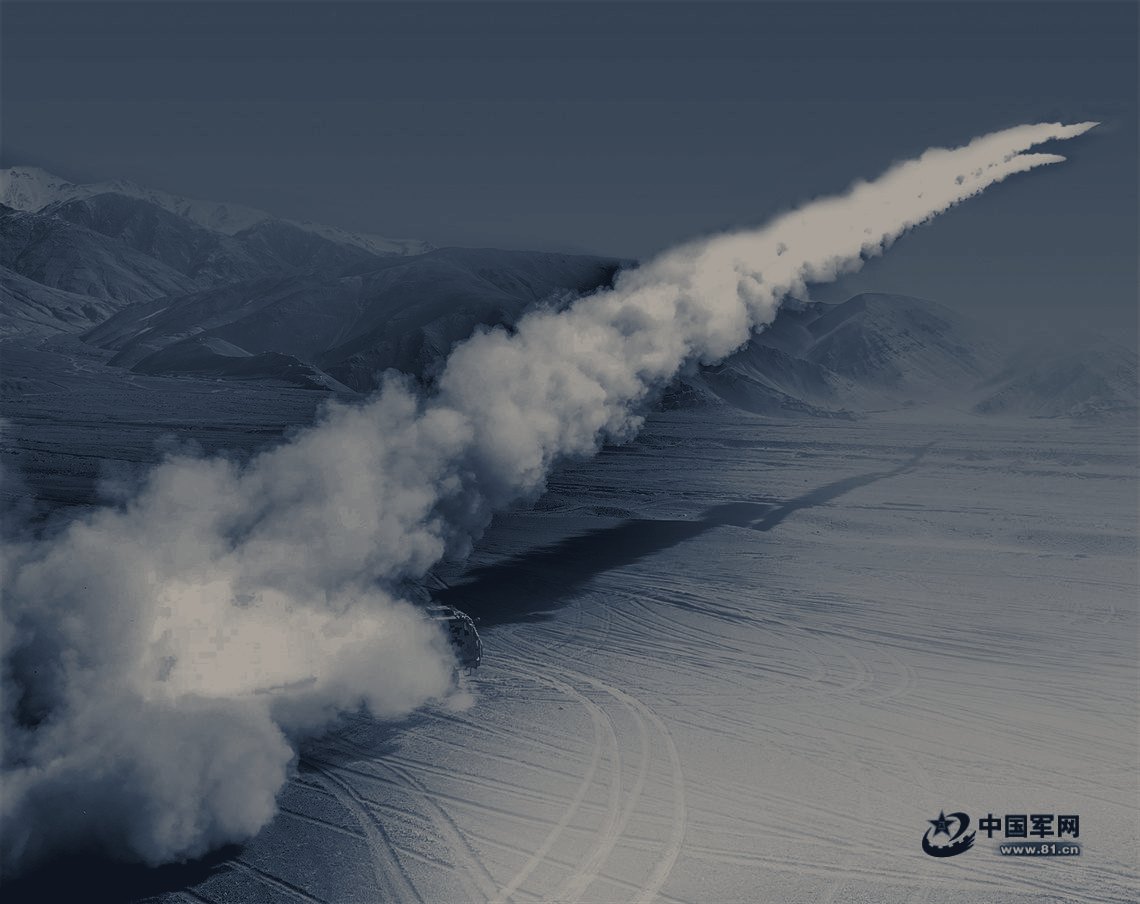
- Rockets Roar Over the Karakoram — Training images, Xinjiang MD rocket artillery subunit 箭啸喀喇昆仑——新疆军区某团火箭炮分队训练影像
- Writing Papers on the Training Ground — ISF center guides research personnel for war 把论文写在演兵场,信息支援部队某中心引导科研人员为战而研
- New Pattern of Unified Management and Shared Use of Warehousing Resources Across the Entire Military 全军仓储资源统管共用新格局加快形成
Cite this edition
Benjamin Yang, “The PLA Watch: Institutional Friction and the Gap Between Form and Function,” The PLA Watch No. 3, China Mil Watch, 23 May 2026. https://indopacificrecord.org/the-pla-watch/posts/2026-05-23.html